Strings
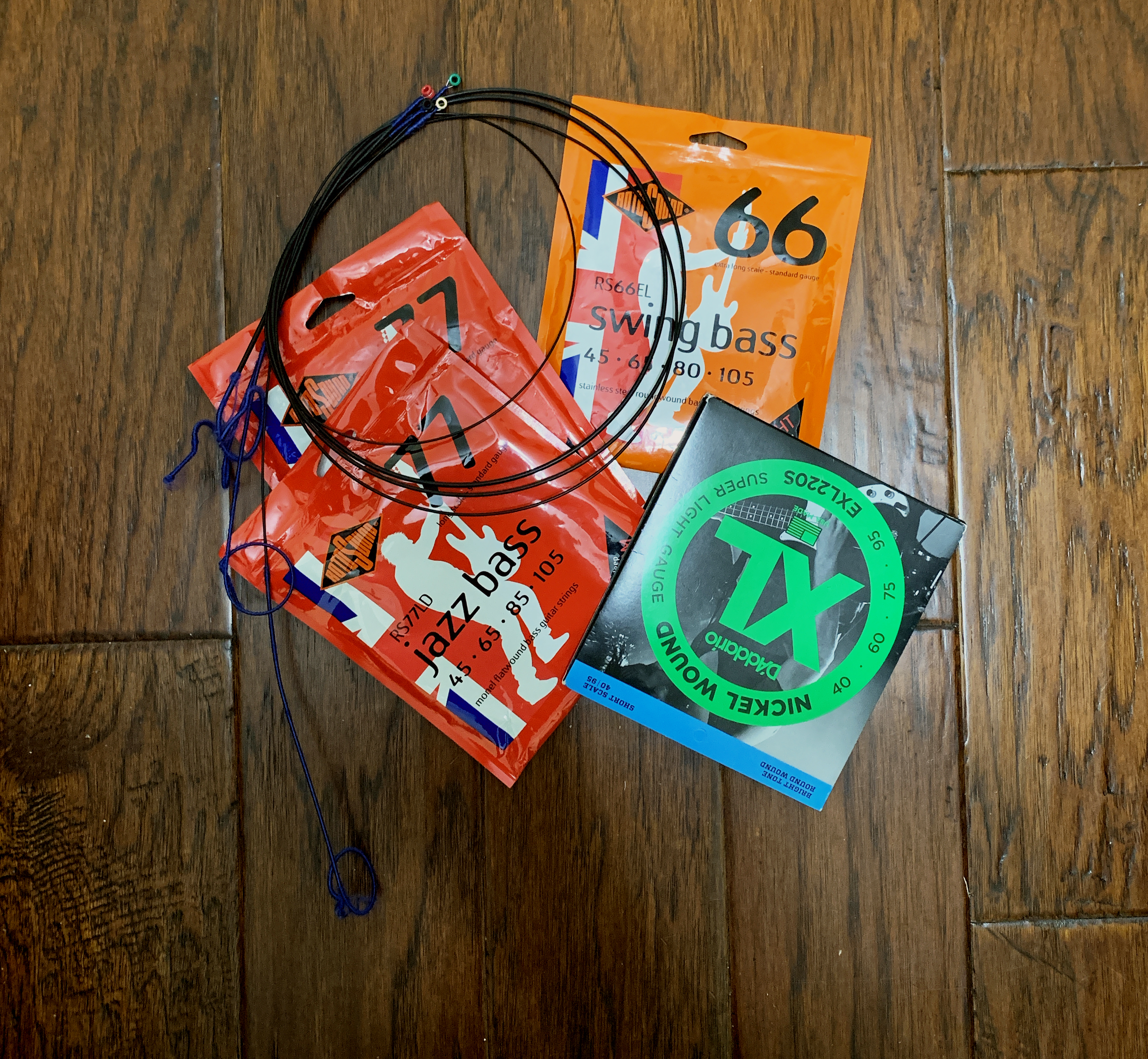
In the early days of electric bass the only strings available were the strings that came on the bass when you bought it. With any luck this set lasted forever. The strings were dead sounding on day one and still sounded fine when some jackass paid $10,000 bucks for this vintage four-string 40 years later.
Then John Entwistle was born and the world was bestowed with shiney new sets of strings that were really bright sounding. All of sudden, there were choices. If you played rock’n’roll you used bright sounding strings called Roundwounds. For everything else you used dead sounding strings called Flatwounds.
Nowadays there are so many types of stings on the market you would think that it actually matters (according to my favorite Luthier, “strings are strings.”).
With that in mind, the same general rule applies. If you want to sound like Duff McKagan (and why wouldn’t you?) use roundwounds. If you want to sound like Duck Dunn, try flats.
Nickel Plated, Round Wound Medium Gauge is a good starting point (Low E = .100 or .105 ) if you were wondering. They are bright like steel but the nickel keeps them from eating your hands and your frets. D’Addario offers a wide variety and that brand is very consistent. Feel free to experiment just know that down the string path lies madness caused by heavy metal poisoning. (Not the music, actual heavy metals.)
 John Truelove