A Fish Story

Mermaid and the Barnacle

Charlie Moses loves cigars. They make him feel like a big shot. Even with dark crescent moons of dirt beneath his fingernails he puffs away like a robber baron behind a big oak desk. The sight of a sea lion basking on a rock often prompts Charlie to remind those around him that if he were ever to adopt a sea lion he would name it Stogie due to the animal’s resemblance to a fat, brown cigar. His brother, known to everyone as Crash, suggests the ripe odor as another reason.

Charlie likes oysters, too.

“You know that old saying about only eating oysters in a month with an R in it? Well, that’s why I like February – there’re two Rs. I reckon that means I eat double,” he says.

I had been searching for Charlie and Crash all day. When I finally found them they were no longer on their boat but seated at a dockside table of the 6 Belles Tavern overlooking the bay and the fishing boats moored in the harbor. I was now eavesdropping on their conversation.

“It’s a good thing February is a short month,” Crash says, “Else you’d eat yourself to death.”

Charlie Moses laughs, pats his enormous gut and sucks another briny slug out of its half shell, washing it down with a hearty swig of beer. Then he gives his cigar another puff and produces a fetid billow that drifts across the table like fog over the bay.

Crash motions to the waitress for the bill. I would have to speak with them later, in a less public location.

The Moses brothers inherited the fishing trade from their father Luther Richmond Moses along with his boat the Barnacle. It was a humble craft that took its name from what Moses senior considered to be the boat’s primary catch. Validation came at the conclusion of every fishing season when a bountiful harvest was scraped from the hull.

The elder Moses never expected his sons to follow in his wet footsteps into the family business. He expected to become a wealthy man, sell the Barnacle and retire young. I confess I am to blame for that fancy.

I first met Luther many years ago before Charlie was old enough for school and Crash was earning his nickname through repeated failures at taking his first steps. It was the height of the season and nearly every pot was brimming with crab and those being hauled to the surface by the Barnacle were no exception.

Dungeness crab is a delicious treat and they are easy enough to catch yourself should you be so desirous but when someone like Luther has done the work of luring them so conveniently into a cage, resisting the urge not to pluck one for yourself is difficult. I was in the process of doing just that when the block and tackle aboard the Barnacle groaned into motion. To my horror I found my hand trapped between the bars of a cage being hauled in and I was part of the days catch. I broke the surface and found myself face to face with Luther Moses who hung over the stern with his mouth agape. He halted halted his machinery leaving me and the cage in the water and I thrashed desperately to escape. “I was putting up quite a fuss,” to quote Captain Moses.

I have friends and relatives who are vociferous regarding our superiority over Earth’s other creatures and while I can’t say I disagree with most of their points, I have a more humble opinion about myself personally. Still, I felt slighted at Luther’s casual reaction over his encounter with a beautiful, enchanting mermaid; he was more concerned over the pilfering of his crabs than beholding one of nature’s most reclusive creatures. I couldn’t help but wonder if I was in the presence of a man so coarse he would lambaste a unicorn if he caught one in his lettuce patch. His accusation of me being a thief was justified – at that moment at least – but I am far from being common. Is it bromidic to say my ego throbbed as much as my poor twisted wrist? He activated the ship’s grinding winches once again and I was lifted fully out of the ocean, swinging from that monstrous cage of indignant crabs. Water dripped down on my tangled hair and my tail flapped helplessly in the air like an ordinary mackerel – it was humiliating.

Flotsam and Jetsam, indeed. Luther welcomed me aboard with a few more prosaic bon mots that sounded as if they’d been borrowed from the churlish mouth of a picaroon. I sat on a slimy deck that reeked of vanquished sea life and only slightly less sour than the barleycorn on Luther’s breath.

“I guess I hooked the mother lode today, huh, my little fish?”

I wasn’t too sure what he was implying. A twinge of fear prickled at the end of my fin when I considered the fate of the other captives, completely helpless now even behind their spiny armor. He seemed all too eager to sail me back to the docks and flaunt the prize he’d snatched from Neptune’s realm. Some cabal of greed and lust covered his eyes in a vitreous glaze transforming them into portentous mirrors in which I saw a reflection of myself gutted, stuffed and mounted like a barracuda. They caught a splinter of sunlight, flashed and the scene changed to one of me swimming in a subaqueous freak show staring out at grotesque, contorting faces pressed to the glass walls of my aquarium prison.

Judging from the smile it was evident that he realized the worth of his unusual catch but I quickly apprised him that the value of my release would be worth far more than anything he might be dreaming about.

“Then the legend is true?” His smile widened, the corners of his mouth disappeared in a forest of whiskers, possibly touching behind his head.

“Yes, well, depending on the legend you have heard.”

“In my legend, I get 3 wishes.”

“One… wish, actually. But it can be anything you desire so consider it very carefully.”

He sat down on the crab pot and gave his stubbled chin a contemplative massage until he’d rubbed the smile into a worrisome scowl. Despite my first impressions of Luther, I could see that he was a thoughtful man who did not take ponderous decisions lightly. We sat for a good while as Luther considered whatever angles his schemes might take. Except for the gentle, wet slapping of waves against the hull and the occasional screeching gull, we sat in ruminating silence.

At last he chose wealth and this is where the story takes a sad turn. I was young and inexperienced; I had never granted a wish before. Looking back, of course, I should have consulted with an elder member of my kind. But to be young is also to be brazen and so when Luther wished to die a rich man I thought my job was all too easy.

“What is your name, gentle fisherman?” I asked.

“Luther. Luther Richmond Moses of Inuit Cliff, California.”

“Then free me Luther Richman Moses of Indian Clip, California. Free me and your wish will be granted.”

He grumbled something about trust as he pried my sore wrist free from the bars. I flopped starboard, threw myself over the gunwale and swam away. Fifty yards out I surfaced again to wave a final goodbye but Luther had his back to me, bent to the chore of emptying his crab pot.

That was the last time I ever saw Luther and there was certainly no reason for a reunion but I was always curious how his life had turned out with the great wealth his single wish had brought him. You can imagine how I felt when I learned that instead of enjoying a life of luxury he had toiled for the next 30 odd years on the Barnacle and had died with next to nothing. Worse still, he was interred beneath a modest headstone donated anonymously with the inscription: Rest in Peace – Luther Rich Man Moses. I was mortified.

“Well, that is some story,” says Crash as he waves away a rancid cloud from Charlie’s Honduran.

“Are you sure we can’t get you something?” asks Charlie. He lifts a can of beer out of cooler. A shard of ice still clings to the metal and Charlie plucks it overboard.

I found the Barnacle and the brothers a mile or two offshore and introduced myself. I was welcomed aboard; Charlie helped me over the gunwale.  Crash went below to retrieve a piece of lawn furniture that unfolded into a chaise lounge. The chair was more germane to a summer patio than the deck of a fishing vessel but it was very comfortable and allowed me to recline fully.

Veneration for phenomenon was apparently not a family trait and my ego experienced a familiar pang from the time I’d met the elder Moses. In their defense, I reasoned the boys had heard the story since childhood and were partially insulated from the full shock of a mermaid in corporeal form. They were a good natured pair and bore me no animosity considering their Father’s tragedy for which I was responsible. They even found humor it.

“We always thought it was one of the old man’s fish stories. He had quite a few.” Charlie let loose a loud belch. “Pardon me.”

Crash shook his head in agreement, “Something he made up to entertain us kids. But when that headstone showed up…”

Charlie finished for his brother, “It gave us pause.”

“A damned good laugh, too.”

And they chuckled again together.

I had come prepared to make handsome restitution but to my surprise the brothers were hesitant to accept. In light of past events they were concerned what form the remuneration might take. It was only after I assured them that I had learned from my mistakes and guaranteed periodic audits of my handiwork that they finally acquiesced, albeit with lingering trepidation.

Charlie still loves his cigars. And although his tastes have become more refined, the higher quality leaf does not emit an exhaust any less offensive according to his brother. Charlie still loves oysters, too. Only now he is less likely to limit his indulgence to months with an R in the name.

The Barnacle was sold and the Moses brothers quickly acclimated to their new lives as men of leisure. They had plenty of time for cocktails at the 6 Belles Tavern every afternoon and would often discuss the validity of their late father’s other fish tales especially one he told concerning a unicorn in his lettuce patch.

Immortal Tea

Image

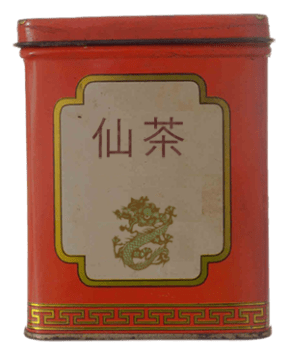
Every afternoon around 3 O’clock Chin-ten would make himself a cup of tea. He preferred Oolong and kept the tender, dried leaves in a red tin with the words Xian Cha printed on the front. On the back of the tin drawn in silhouette, a Chinese junk sailed towards the skyline of an exotic harbor city underneath a brief history of Xian Cha tea. Chin-ten had never brewed nor tasted Xian Cha. The container was empty when he purchased it for a dime at a garage sale some years ago.

Chin-ten had never sailed on a Junk either and the closest he’d ever been to an exotic port was New York harbor. Chin-ten was born and raised in Flushing where he owned and operated a framing shop. He lived above the shop with his wife Chu-li and when she was still alive they would have tea together every day at 3. He always told his wife as he scooped Oolong out of the tin that one day they would have to sample this recherché delight called Xian Cha but they never did.

A few months after Chu-li had passed away, Chin-ten hung a help wanted sign in the front window of his frame shop. While he could legitimately justify the need for an extra hand, he had to admit to himself that he was lonely working long hours all by himself. And despite his interactions with customers he worried that his isolation was having a negative effect on his sense of reality.

Of the several people who inquired only one seemed capable, a girl in her early twenties named Betty Wu. Betty claimed to be a foreign exchange student enrolled in art school and was studying museum restoration although Chin-ten suspected that she was somehow in the country illegally. The young girl was very pretty and reminded Chin-ten of his late wife in many ways but he asserted to himself that his decision to hire her was based solely on her qualifications: an interest in fine art as a career and previous experience.

She worked weekday afternoons to accommodate her morning class schedule and Chin-ten paid her in cash to avoid any embarrassing revelations of citizenship that could result in the loss of his only suitable candidate. Betty proved to be a reliable and tireless helper.

Chin-ten had never changed his afternoon routine and every day at 3 o’clock he brewed two cups of tea. Only now he shared them with Betty Wu.

Despite the positive changes that his new assistant brought, Chin-ten still missed his Chu-li terribly. He often thought the worst thing that could ever happen was to lose his wife and her passing had unfortunately proved him correct until one day when a customer visited Chin-ten’s shop with a collection of photographs to be framed.

On that morning, Chin-ten looked up from the wooden frame he was assembling when he heard the pleasant jingle of the tiny bell above the shop’s front door that announced the arrival of visitors. The doorway connecting the workshop and the showroom was covered by a heavy curtain. Chin-ten pushed it aside and stepped behind the counter where a young Asian man was standing. He wore overalls and baseball cap with the name Dragon Imports stenciled in gold letters on the crown.

“I wasn’t expecting a delivery,” said Chin-ten.

“Actually, I am dropping off some things from my boss to be framed, photographs,” the man responded, holding up a flat parcel.

The photos were sandwiched between two pieces of cardboard. He placed the package on the counter and Chin-ten carefully peeled off the adhesive tape holding them together.

“It is unusual,” Chin-ten spoke as he worked, “Typically I present the customer with a choice of framing options in person.”

The man explained that the instructions were inside as Chin-ten removed the last of the tape.

Chin-ten lifted the top piece of cardboard using both hands.  When he looked down at the exposed photographs he heard a loud gasp escape from his mouth. The hair on his arms and the back of his neck were on end and he felt the blood drain from his face. He stood motionless like a statue of a man removing the lid from a crate and amazed at the contents.

A sheet of paper had flown out of the packet and fluttered to the linoleum floor. The delivery person had gone to retrieve it and returned deeply concerned over Chin-ten’s reaction.

“What is it, are they damaged?”

He looked at the man, mouth agape, and immediately tried to compose himself and hide the look of shock that calcified his face.

“No, no. Everything is okay, okay.” He forced a smile as the man handed him the paper.

“These are the instructions.”

Printed on the paper was a list that detailed the type of molding, glazing and the color of mat board to be used to complete the framing job as well as who to contact when the work was finished.

“Do you need an estimate?” Chin-ten asked. His voice had the monotone inflection of a robot.

“My boss didn’t say but he wondered if the job could be done by tomorrow.”

Chin-ten cleared his throat to find a chipper tone, “It will cost extra for a rush the job but yes I will have it done by tomorrow.”

The bell rang a good-bye to the delivery man as he left. Chin-ten went to the front window and watched him cross the street to where he’d parked a panel truck with the company name Dragon Imports on the side. The man climbed in and drove away.

Chin-ten took the photos into his shop and spread them out on a worktable. He rubbed his eyes as if something was distorting his vision. He took a deep breath and looked at the assortment of 8 x 10 portraits once more. Chin-ten had framed dozens of glossy corporate headshots just like these. There were five in total, three men and two women, all wearing business clothes and bright, friendly smiles in front of a plain matte background. These were a product of an uninspired yet professional studio photographer and there was nothing exceptional about them, certainly nothing to provoke the reaction he’d displayed in front of the delivery person, except for the one that had been on top of the stack. Chin-ten held the photo in his trembling fingers and stared in disbelief at the face of his late wife Chu-li.

Why did this customer have a photo of his dead wife? Did she have a secret life of which Chin-ten was unaware, had she been involved in a cult, was she still alive? The questions were swarming in his head like a dark cloud of starlings when he heard the bell above the door. That would be Betty, he thought, and hurriedly collected the loose photos. He put them out sight, saying nothing about the matter when Betty stepped through the curtain.

That night Chin-ten found it difficult to fall asleep and when he did at last he slept fitfully, waking often before drifting off again. Around 4 a.m. he decided it was useless to stay in bed. In the kitchen he let the tap run until the water was cold and splashed a few handfuls on his face before putting the tea kettle on to boil. He walked downstairs to examine the mysterious photograph once more but to his astonishment, Chu-li was no longer in the picture.

Chin-ten was frightened that he was losing his mind and was unduly startled by the sudden, querulous whistle of the tea kettle that fractured the pall of silence. As he mounted the stairs the kettle was silenced as if it had been taken off the heat. When Chin-ten entered the kitchen he saw that Chu-li was steeping the tea.

“Don’t be frightened, Chin-ten. Here, I have made your tea.”

He began to stammer.

“No, Chin-ten, this is not a dream. I am real but I am a ghost.”

Chin-ten felt his knees weaken and he clutched the back of a kitchen chair for support. The legs made a dry scraping sound as he pulled it out from under the table to sit. She placed the cup in front of him and the steam rose from the hot liquid like an apparition. He hesitated, picked up the cup with a shaking hand, blew and took a sip to test the corporeal nature of the drink.

Chu-li took the seat across from him and spoke. Her breath was icy and her words made Chin-ten shiver.

The year she died, Chin-ten was to celebrate his 30th birthday and Chu-li wanted to give him a special present to commemorate this pivotal event. She had given it considerable thought but was unable to think of an appropriate gift until one afternoon at 3 when the two of them were having tea. In all the years that Chin-ten had been using that peculiar tin, he had never once tried Xian Cha tea and Chu-li was determined to find this alluring delight. Covertly, she examined the container and found a label on the bottom that gave the name of a company and an address: Dragon Imports, Java Street, Brooklyn, New York. There was no phone number listed so she went to the business in person.

Dragon Imports was located in a desolate and depressing section of the city surrounded by junk and scrap yards and a water treatment plant. She made the long trip from Flushing to Greenpoint by bus and walked the remaining distance from the bus stop to an unassuming warehouse on Java Street. The company was on the second floor of the building and she climbed a worn, rickety staircase to the office.

The cold, dimly lit room was large and smelled of mildew. It was cluttered with a divergent array of goods including anything from cookware and pottery to lamps and silk garments. The only congruity to this merchandise was that it might have been imported from the Far East. The space was unattended but there was button on the wall to push for service. Within seconds an old gentleman who introduced himself as the owner of Dragon Imports appeared from seemingly nowhere. His appearance was as impeccable as his politesse. At first he spoke to Chu-li in Mandarin but quickly changed to English when he realized by her expression that she did not understand the language.

When Chu-li explained why she’d had come and asked if she could purchase Xian Cha tea directly, the owner assured her that he would be happy to sell it to her but that it was very expensive. It was indeed exorbitantly priced and Chu-li demurred.

Seeing her disappointment, the man suggested another gift. He cited her husband’s appreciation for decorative containers and took from a shelf a Japanese puzzle box with a delicate marquetry that formed the shape of a serpent wrapping itself around the exterior. He commented on the fine craftsmanship and demonstrated the delicate complexities involved in finding the single combination to open the box by sliding hidden panels in the proper order. When he had removed the lid he held it up to Chu-li and she saw her reflection in a mirror affixed to the underside. The moment her eyes touched the glass she felt dizzy but she was unable to look away. She no longer recognized the swirling mosaics of multi-colored glass that had been her own eyes. The undulating kaleidoscopes peering out of the mirror slowly lost all color until they were finally lifeless black. It was over in manner of seconds and as the man withdrew the lid from Chu-li’s vision she saw that his lips were curled into a sinister grin. She left quickly, nearly falling down the staircase as the man’s hollow laugh chased after her.

In the months that followed Chu-li developed an illness that mystified her doctors. She presented with no other symptoms but high fever and extreme weakness. She became so debilitated that Chin-ten had her hospitalized and she was placed in an intensive care unit. Her condition deteriorated rapidly until one morning when a nurse shook Chin-ten awake from where he was sleeping in a waiting room chair. She whispered that Chu-li had slipped away.

“Chin-ten, the man at Dragon Imports steals souls. This theft of my being is what killed me. He uses these souls in Xian Cha tea; he grinds them up and mixes them into the leaves. The tea is sold to people who desire a new life. His customers are the terminally ill, the very old or the hunted criminal who is desperate for new identity.”

Chin-ten blew on his tea. He had wrapped both hands around the cup against the chill that gripped the small kitchen.

“What would you have me do, call the police? And tell them what? Do you know how crazy this sounds?”

“Chin-ten, there are many more like my soul being held prisoner in his puzzle box. We will lose our souls forever unless we can be freed.”

“But, I’m no shaman…witchdoctor…whatever you call it. How do you expect…”

The ghost of Chu-li smiled and said, “Simply find the puzzle box and open it, dear husband.”

Chin-ten woke early the next morning slumped on the kitchen table, the remaining tea cold in the cup beside him. He felt foolish for having fallen asleep in such a place and worried for a moment that he had started sleep walking. He convinced himself that Chu-li’s visit and her fantastic story had all been a dream and he castigated his ludicrous subconscious.

After he’d washed and dressed he went directly to his workshop.  The photo of Chu-li was as it had been when it was delivered with her lovely face smiling out at him. Regardless of the odd nature of his situation, Chin-ten knew it would be of interest to the police.

Why would Dragon Imports be in the possession of a photo of his deceased wife? Perhaps something or someone there was responsible for her death. What about the other faces smiling up at him from the work table? Were they in danger, had something terrible befallen them as well. It was, as Chin-tin resolutely decided, a matter for the authorities to investigate.

The phone and the number for his precinct were in the front room. As he started in that direction he noticed something moving on the photos that stopped him short. At first he thought it was light refracting off the paper’s high gloss but instead it was the eyes of each person starting to change. Chin-ten watched astonished as each underwent the kaleidoscopic phenomenon that Chu-li had described before extinguishing to pitch black.

He set to work on the job immediately; he wasted no time in ridding his shop of whatever evil he had allowed across the threshold. He called the contact number in the instructions. The same delivery person as before arrived with the balance due and was gone before noon.  When Betty Wu arrived he left her in charge of the shop with instructions to lock up if he hadn’t returned by closing time from his important errand.

By mid-afternoon Chin-ten was climbing the squeaky steps of Dragon Imports. The picture that Chu-li had sketched in his mind was so vivid that Chin-ten felt as if he had made this squealing ascent many times before and knew what to expect on the other side of the office door. The room was deserted and the raspy complaints of the corroded door hinges reported his entrance to no one. The dusky light of an expiring afternoon filtered in through large, grimy windows with chicken wire skeletons.

There was a small hole in the shabby wooden floor that allowed a glimpse of the world that bustled below him. From what Chin-ten could tell the business occupying the ground floor was some sort of sweatshop. There were bolts of colorful cloth printed with the characters of a popular cartoon and women hunched over whirring sewing machines.

Chin-ten surveyed the merchandise mounded on tables, stacked in bins and stuffed on shelves. Had Chin-ten known no different he would have guessed that Dragon Imports was the supplier of ridiculously cliché, Pan-Asian vendibles to every stall in Chinatown. Standing prominently in the morass of second-rate inventory was a bronze statue of a Chinese soldier from an ancient dynasty. Posted as a sentry in the absence of a shopkeeper, it followed Chin-ten’s movements with blind, patina eyes. Chin-ten focused on a wall of Japanese puzzle boxes of various shapes and sizes. They were cheap factory models with poorly applied lacquer and crooked decorative patterns; amid these imitations the object of his search was easy to spot.

The chest was simple but undeniably handmade by a master craftsman. The scales glistened along the back of the serpent coiling around the box. Its hypnotic ruby eyes flashed and its ivory fangs were poised to strike at whoever dared plunder the treasure it guarded.

“May I help you, sir?”

Chin-ten jumped, startled. He had not seen or heard anyone enter the room and he wheeled around abruptly to see an old man staring at him through a pair of wire rimmed glasses with thick, round lenses. He was short, at least a foot shorter than Chin-ten, and he wore a fine silk suit that was perfectly tailored to fit his lean stature. He stroked a perfectly trimmed goatee that was silver with age and Chin-ten could see that his long fingernails were immaculately manicured and tapered into sharp points. His head was bald but the skin was stretched tight across the shining dome of his skull and free of crease or livery blemishes.

Chin-ten was caught completely off guard. In his haste to get to Dragon Imports and find the puzzle box he had failed to invent a believable excuse for his visit, especially to a business hidden away in the nether folds of Brooklyn’s seedy belly. He blurted out, “Tea, I came to purchase Xian Cha tea.

The old man’s spectacles magnified his bright, inquisitive eyes and they narrowed as he scanned Chin-ten from head to toe as if shrewdly appraising the common appearance of a man seeking such an exceptional delectation.

“Of course. I am Mr. Tan. I am the proprietor of Dragon Imports and I perceive you to be a man of exquisite taste. How, may I ask, did you come to know of our tea?”

Chin-ten lied, “A business associate of mine. You understand, naturally, I cannot disclose a specific name.”

The old man grinned, “Naturally. And did he, your associate, disclose the value of our tea?”

“He said it was priced according to its value but no specific price was mentioned.”

Mr. Tan slid a wispy hand into the inside pocket of his suit jacket and produced what appeared to be a business card and held it forward. At first Chin-ten thought the owner suspected he was being deceived and this gesture politely implied that their business was concluded.  The card that Chin-ten accepted was plain, however, except for a price in dollars written in neat script – outrageous.

“Today’s price,” said Mr. Tan.

Chin-ten tried to act nonchalant and handed the card back saying in a voice he hoped sounded insouciant, “That figure will not a problem.”

“Excellent. Please, this way.” Mr. Tan signaled for him to follow and he led Chin-ten to a second door that opened to a long, narrow hallway. “After you, sir.”

The polished hardwood floor that stretched the length of the brightly lit passageway shimmered like the surface of a pond beneath the midday sun. The exposed brick walls on either side had been painted fire engine red and seemed to pulse like hot blood coursing through an artery. Chin-ten heard the percussive taps of Mr. Tan’s spotless wingtips behind him as the two marched forward. They entered a rotunda with plain white walls, a floor of damask colored marble and a high vaulted ceiling finished entirely with gold leaf. A cincture of lights was concealed behind molding that ringed the junction of wall and ceiling illuminating the gilded canopy. The light radiating down washed the room in warm, aureate brilliance.

As in a museum gallery, framed portraits were hung around the entire circumference of the room below an individual brass picture light. There were, Chin-ten counted, 35 in total. Underneath each stood a podium in the style of an Ionic column with a fluted shaft and scrolls carved into the capital. Resting on top were rectangular packages wrapped in simple, Kraft paper. A palsied woman who looked to be in her seventies was the only other customer in the space. She was dressed in Chanel and supported herself with a walking cane.

Mr. Tan spread his arms in a gesture of presentation. “Please. You are free to browse our current selection. Each blend is one of a kind. I am positive you will find a tea to your liking.”

Chin-ten approached the portrait closest to him. It was the same style of photo as the five he’d framed earlier. The work matched his own although he did not recognize the handsome young man smiling back at him. Below the photo was a plaque listing the subject’s age, height and weight. The only other information was a manufacturing date and serial number that matched that which was printed on the packages of Xian Cha tea. He moved to the next, a beautiful young woman with the same information.

The woman across the room summoned Mr. Tan who went to assist. Mr. Tan placed her selection of tea in the shoulder bag she carried. Then he removed the photo from the wall above the empty podium and escorted her out of the room.

Chin-ten went quickly from portrait to portrait. He came to a stop in front of a familiar face. A caustic mixture of rage and bitter sorrow boiled inside him and he felt his eyes well. That there was no name to indicate who Chu-li had been in her past life served as a final ignominy. It was as if she had been a nameless victim of senseless genocide and interred in a mass, unmarked grave.

From far down the hallway he heard the snap of Mr. Tan’s hard soles on the wooden floor. They grew louder as he approached and soon his footsteps were reverberating off the cold marble until the ceased directly behind Chin-ten.

Chin-ten closed his eyes and in the darkness a motion picture flickered on a screen. In the film Chin-ten whirls, delivering a solid punch to the tender abdomen of Mr. Tan who doubles over in pain as he gasps desperately for the air forced out of his lungs. In a single motion Chin-ten grabs the defenseless head and brings his knee powerfully up into Mr. Tan’s face knocking the old man to the floor.  Chin-ten kneels over the prostrate body and begins smashing the skull into the stone. The violent act creates wet, crunching sounds as the bone shatters and the insides spray out covering the floor with a gruesome impasto of blood and brains.

Chin-ten opened his eyes. Mr. Tan was waiting patiently with his hands folded in front of his chest and wearing a serene smile. He asked politely, “Have you found your perfect tea, sir?”

Chin-ten answered flatly, “No, none of these will do.”

Mr. Tan, in all sincerity, looked disconcerted that he could not meet a customer’s needs. He said with concern in his tone, “Please, take your time, perhaps another look.”

“No, none of these will do. But I will have that Japanese puzzle box you have in the front.”

This was met with silence.

“The one with the snake wrapped around it. I will have that one.”

Mr. Tan was calm but his polite smile had vanished and he spoke slowly in voice hardened by gravity, “That is not for sale, sir.”

“I will have it.” And Chin-ten was off and running down the throbbing red hall with Mr. Tan’s quick, clicking steps in pursuit.

In the front office Chin-ten seized the box from the shelf and at once realized he had no idea how to open it. When Mr. Tan caught up with him, Chin-ten was holding the box over his head and as the old man lunged to intervene Chin-ten slammed the box down on the sharp apex of the bronze warrior’s helmet. Mr. Tan screamed for him to stop. Chin-ten closed his eyes and the violent film played. He brought the box down again and again with all his strength until it splintered and broke open with a loud crack. He threw the mangled wreckage on the floor at Mr. Tan’s feet who knelt immediately, trying to mend the damage. As he did, shining globs of metallic liquid slithered out like mercury released from a smashed thermometer. Mr. Tan frantically tried to catch them but they eluded his desperate clutches and glided with the twitching hide of quicksilver through the hole in the floor. Tan crawled on all fours to hole and bent to peer into the sweatshop below. He lifted his head and his face twisted into a hideous scowl. He rose to his feet and pointed a lithe finger at Chin-ten and began cursing him in Mandarin and then in a dialect Chin-ten did not recognize. His complexion had flushed to deep crimson and drool oozed from the corners of his mouth as he spit out his inflamed diatribe. The man’s eyes, bright with rage, rolled back into his head, exposing the glistening, translucent whites, crisscrossed with crooked rivulets of grotesque, red veins. He bolted from the room, down the creaking steps in pursuit of what Chin-ten reckoned were emancipated souls.

Alone, Chin-ten returned to the gallery and collected the packages of tea on Chu-li’s pedestal like remains. He looked at here beautiful face once more and was gone.

In the anxious weeks that followed, Chin-ten fully expected to be paid a visit by the police with warrants of arrest for theft and destruction of property. He worried that Mr. Tan himself might come into the frame shop reinforced by ghoulish, satanic confederates seeking some sort of recompense or worse. But nothing happened and Chin-ten’s modest life returned to a normal routine. The only evidence that the absurd events ever took place was the tea. He kept it wrapped in the kitchen beside the tin of Xian Cha that he promised himself he would dispose of but had not.

One afternoon at 3 o’clock while Chin-ten was waiting for the water to boil, he took the tin from its place, flipped the can over and carefully read the back. He’d read the product description many times over the years but always with the detached attention of someone reading the insignificant information on the back of a cereal box while they ate breakfast.

Xian Cha, tea of the immortals…an ancient art of tea making…nourishes the soul…transform into a new person…

How long would it take? He wondered. He opened one of the Kraft paper packages and emptied the tea into the tin. He brewed a cup and took it downstairs to the frame shop where Betty Wu put down her work, eagerly accepting the refreshment.

“Is this different?” she asked after her first sip.

“Yes, it is something new. Something I think you will like.”

Betty Wu shrugged. “It tastes like green tea, Chin-ten. But it’s better than that Oolong you always make.” She winked at him and drank what would be the first of many cups filled with Xian Cha tea. In time all of the tea was gone and Chin-ten was reunited with his wife, Chu-li.

Sharks are Nothing to Joke About

joke-sharkAs a boy I was an actor in the motion picture Jaws. Not the original but the sequel, Jaws 2. It wasn’t big role in fact it was a “bit” part. This pun sent the nameless, faceless strangers in my dream into a fit of laughter, rib clutching and thigh slapping. “’Bit’ part, did you hear that?” a few repeated, choking on hysteria.

A ticker tape parade was held in my honour and I rode down the valley of heroes in a Cadillac convertible sitting up high on the shining black metal skin with my feet resting on the leather seat and waving to a cheering crowd. Buckets of confetti transformed the mild spring day into a raging blizzard and long ribbons of ticker tape slithered through the air like flying snakes.

A marching band blared and I woke to the opening trumpets of Tchaikovsky’s fourth coming from the clock-radio on my night stand. I hit the snooze button and closed my eyes, groping in the darkness for the door that opened to the twisted, shadowy corridors and enigmatic chambers where obscure characters told better jokes.

A Western Scene

cowboy-truelove

The wind is up. A small tornado of dust twists a dervish down the street of packed earth. The town’s main thoroughfare is cleared of most activity by the sun in Arizona’s midday sky. Dogs pant beneath porches in the cool dimples they’ve dug in the dirt.

The louvred pine doors of the saloon squeak and flap; there stands Nate.

Addressing me at the bar: “Cowboy. There was a man come by the livery looking for you. I thought you might be getting a shave so I sent him to the barber. I told him if you weren’t there then sure enough you’d be here. And sure enough, here ye be.”

Me, not so much addressing Nate as my whiskey glass: “How could you be sure he knew who to look for? Saloons get crowded in hot weather. ”

“To be sure.” Nat regards the amount of elbows on the bar. “He freely admitted not knowing you on sight. So, I give him a description.”

Nat, with surprising eloquence, delineates my features.

Not a boy but no old timer. Less than 6 feet in boots yet still taller than a lady. Lean and wiry as opposed to outright skinny. Hair, full and brownish, not dark – a touch of blond in the sunlight, truth be told. Brows are prominent but it can’t be said of them to be bushy like burlier oafs and the dancing brown eyes beneath can give out a fierce stare sharp enough to pierce raw hide. A month away from the razor and the only hair on his face will be that which grows around the mouth and chin, a natural Van Dyke, if you will. Fair as the English gentry. He will be the cautious man. Expect no gregarious “Pleased to meet thees” or other such frivolous pleasantries. Once known from Adam, though, and trusted, he is true and faithful as your best hammer.

All smiles, proud of the portrait he has painted, asks: “How did I do, Cowboy? Can you picture thee.”

“I can, Nate, I truly can. It is if I were looking into a woman’s vanity. And I am flattered by your kind words and candor as to my character.”

“A pleasure, to be sure.” Modest: “The allusion to a hammer was my own device.”

Then he asks, pleased to have been of service, “And this fellow, did he find ye alright?”

“He did indeed, Nate. He did indeed.”

My drinking hand – glass, whiskey and all – motions in the direction of the table and chair overturned by the prostrate body beside it.

The louvred pine doors announce another. It is Uriah adjusting his beaver felt stove pipe knocked askew by the low doorway.

“Begin your undertaking, Uriah!” The bartender, wiping a mug, is anxious to remove the stiff before peak hours.

“I declare, Cowboy. If I’d have known this to be his grim business I would have left out a few details. I hope you don’t hold a grudge.”

“No, Nate. In fact, in your description I noticed one particular omission that worked in my favor.”

“I can’t think what that would be, Cowboy.”

I wink. “Cowboy shoots better when drunk.”

L.A. Office Party (Part II)

Our building had a rooftop garden where, during nicer weather, many took their lunch or bronzed those portions of their hide left exposed by summertime fashion. Levi used the area in all weather as a sanctuary from his hectic duties and tormentors. Because of his calm demeanor, I sometimes pictured him sitting cross-legged amid the potted plants, meditating and practicing deep-breathing exercises to find an inner peace. In reality, he used these brief respites to release the anger and frustration that accumulated with each phone call or capricious agenda from Ms. Hooper. I imagined a clever mechanism of behavior-regulating valves rigged up to Levi’s innards by a pipe-fitters union working on behalf of some cosmic anger management organization.

As we emerged into the muted, gray afternoon, Levi twisted the first valve, which let loose an explosive tirade.

“It says right there on all those laminated placards from the State Board of Employment in the kitchenette that I don’t have to take this shit!”

I was only able to make out a sentence or two before it turned into an incomprehensible rant akin to a sermon preached by a homeless person in a deep state of agitated passion.

Working in tandem was a sort of intake valve. This he used to pull the fragrant smoke from his special cigarette deep into his lungs where a spicy cloud remained for longer than I thought humanly possible. Little wisps of smoke would trickle out through tightly clenched teeth while his lips mouthed the syllables of the unbroken anathema, his voice no more than a choked, wheezy buzz. A long suspiration carried his final incoherent rambling mixed with a ghost-colored plume of effluvial exhaust to join the metropolitan smog.

Levi offered the cigarette to me. It was rolled by the nimble fingers of an expert, using a blend of tobacco and hashish. A delicate tendril of smoke curled from the ashen tip and I placed the moist end to my lips and took a drag. I began to cough almost immediately, while I struggled to keep from wasting our receptionist’s precious anodyne.

Whatever his system was, it had restored Levi’s calm composure and my spasms had helped return his convivial smile. I passed the smoldering narcotic back and took a cleansing breath.

“Did I ever tell you about my piss test?” I asked.

“I don’t believe we’ve had this conversation.”

Employment here was contingent on the successful completion of a drug screen and background check. I presumed that we had all been subjected to the same humiliating experience of reporting to a diagnostics lab and supplying a technician in scrubs and tacky jewelry with a fresh urine sample, although I found it difficult to understand how our Human Resources department had received a clean report for a candidate by the name of Leviticus Johnson.

“I couldn’t go, couldn’t perform. I seized up under pressure. Shy bladder, they call it.”

Levi took a drag. He spoke while holding his breath.

“Shy what?”

“Bladder. You can’t pee around other people or in strange places.”

The idea seemed to amuse him more than my inability to hold smoke. The cigarette dangled from the corner of a grin that had grown slightly sadistic and he made motions with his hands for me to continue.

“No shit. Go on.”

I had not always had this problem. It had developed somewhere along the timeline of traumatic events that marked my life like mileposts on a crooked highway. It was an inconvenience, but I had developed a few tactics to manage my handicap. For instance, whenever a trip to the physician required urination on demand, I made a point to consume as much coffee and water as I could hold beforehand – to the point where I would be cramped and desperate upon arrival to the examination. Such was my strategy that day, yet I remained uncomfortably full for several hours after two failed attempts to deliver the goods.

On the day of my test, I took the paperwork sent to me by the Human Resources department to a lab in my area. I had not been required to make an appointment; patients were handled on a first come, first serve basis. I located the suite number and entered a narrow, somber waiting room. The space was sparsely decorated with a row of well-worn chairs that ran along the wall. Above them a few framed prints portraying pastoral scenes on yellowed paper were hung. At the end, opposite the door, stood a high counter that was deserted except for a sign silently commanding all patients to add their name to a list and wait to be called. Although unattended, the sign made the desk an indomitable figure in the space. A ballpoint pen was tethered by a piece of string to a clipboard holding a form in the tight grip of its metal clamp. The form had suffered the long-term effects of inaccurate photocopier reproduction. Each generation had introduced a slight deformity into the original and the column headings for Name and Time of Day along with the ruled lines on which to enter information had taken on a wavy appearance. I made note of the hour and jotted it all down before taking a seat. I thumbed through a soiled, out-of-date magazine full of smiling Hollywood buffoons to take my mind off my swollen belly. Periodically, an expressionless lab technician would appear behind the counter, consult the list and compare the number of entries to the population of the waiting room.

My name was called by a Puerto Rican woman with an immaculate manicure and more gold jewelry than a lineage of monarchs. Her only identifying marks that she worked in the medical profession were her pink, surgical scrubs and a photo ID. She gave me a stubby bottle accompanied with a baffling set of instructions that seemed overly complicated for peeing in a cup and pointed to unoccupied toilet.

It felt as though my excess water would cause a severe rupture or take a more dramatic exit by leaching out through my pores when the normal exit route refused to operate as designed. Both of the times that I came sheepishly out with an empty cup, my technician greeted me with the type of admonishing glare an exasperated parent reserves for a naughty child. She offered no empathy or comforting words of assurance and encouragement – only a stern warning that after three failed attempts the test would be cancelled and I would have to return in 24 hours to try again.

I stood frozen above the gaping maw of the porcelain bowl on my third and final try. It seemed to be mocking me and I felt my manhood shrivel. Humiliated and dejected, I was about to admit final defeat when I remembered a bartender friend’s passion for bizarre tales. I figured this qualified so I dug the cell phone from my rear pocket and dialed his number. His sonorous chuckling, made raspy by a two-pack-a-day habit, got me laughing so hard that I would have wet my pants had they not already been unfastened and dangling around my knees. With smug triumph, I presented the bottle containing several ounces worth of drug free evidence at a fresh 98.6 degrees to a caramel-colored hand. She screwed the lid on tight and carefully affixed a sticker that held my identifying information around its fat middle. Over the top she ran a piece of tape with some laboratory data and flattened the ends down to either side. This was evidently to prevent tampering with my watery testament and it reminded me of an unopened bottle of liquor. I was amazed that her long, glossy fingernails allowed her to perform these duties so deftly. I signed a form and was free to go.

“Damn.”

Levi drew the word out as if he was holding a musical note for several bars.

“And I thought I was uptight. Come on let’s get off this roof. There’s probably something I’ve got to clean up by now, anyway.”

The cigarette had burned down to an empty paper twist and Levi flicked it with his thumb and index finger into the wind. Its tiny white body was just a spec but I tried to follow it as it flew from the roof joining the snow flurries that had started to swarm in the growing darkness.

The partygoers had abandoned the conference room leaving behind the scattered debris of plastic cups and dishes with the remains of food, balled paper napkins, crumbs, and empty bottles. Levi dragged the large chrome waste can out of the corner and began to fill it indiscriminately with the waste he cleared from the table.

“Another L.A. office party.”

I had been to Los Angeles on a few occasions but there was nothing about this party that even hinted at having a California theme with the possible exception of the guacamole dip or the odor of reefer which had entangled in the ropey wool of my sweater along with the February cold.

Lame Ass, is what that means, if you were wondering.”

The CD we’d left playing had reached its end and the only music to be heard was someone in the distance whistling the Cornell fight song, if such a thing still existed. The greasy, fetid stench of fast food drifted in, comingling with the lingering post-party smells.

“You ever ask yourself, ‘Why did I put up with that kind of crap just so I can get a job working here’?”

I held up a wine bottle to the light. It still had a good mouthful or two left swirling around inside the tinted green glass. I considered upending the thing and finishing it off.

“Every day, Leviticus. Every day.”

Why Dogs Love Snow

ZakAnyone who owns a dog has witnessed their reaction to snow and has probably wondered why they get so get excited.

The recent blizzard that rolled through the Northeast U.S. last night, leaving behind several inches of the stuff, has the dogs in my neighborhood in a special type of euphoria.

Here is a simple villanelle that I think does a good job of explaining why all the fuss.

Why Dogs Love Snow

This is why all dogs love snow
They were once angels like Gabriel
Dog reversed spells God, you know

Who will protect man if we go?
They have no claws, teeth or sense of smell
This is why all dogs love snow

Man’s wits its true are keen, although
They’re often led astray to Hell
Dog reversed spells God, you know

Winter sky; lonely howls come from below
Send news divine in an epistle
This is why all dogs love snow

On every crystal flake words flow
From quills dipped in seraphim’s inkwell
Dog reversed spells God, you know

Frozen to his fur, dog plucks a folio
And reads aloud to man this sacred mail
This is why all dogs love snow
Dog reversed spells God, you know

The L.A. Office Party

“This is a story about an office worker who questions the value of his new job after relating a humiliating experience he endured in order to be eligible for the position.”

 The L.A. Office Party

Preparations for the L.A. Office Party began in the morning and included collecting proceeds from the entire office staff to fund the event. It was intended as a celebratory sendoff for two people I’d never met, much less ever worked with, yet before me stood the soiree’s two organizers holding a child’s trick-or-treat bucket made from orange plastic and molded into the shape of a smiling jack-o-lantern. By the time the pair of young women had worked their way through the labyrinth of cubicles to my desk, the garish, fake pumpkin head was lined with wrinkled bills. I tossed in the requested cover charge and they shuffled on to the next desk where one of the girls picked through the Halloween gourd to make change for a twenty. Going desk-to-desk was a popular strategy here whenever a barrage of e-mail invitations to a corporate function was met with little enthusiasm. I had witnessed the same tactic employed during the holiday season after a string of e-mails, decorated with holly and candy-cane clip art, had failed to generate enough interest in the office’s Secret Santa. No one could refuse two beaming young ladies with hat in hand and a wholesome, company sanctioned purpose and so I watched everyone in my row, even the people who would never attend, ante up.

I had no desire to spend an additional hour with co-workers after the whistle blew, drinking cheap beer while nibbling on corn chips in the vain hope that the explosive crunching noises in my head would drown out the banal small talk. I was already spending a full nine hours sitting in a small cubicle, lit only by the light emanating from my computer monitor. On the day I started, the fluorescent tube overhead had buzzed for a brief period, sputtered, and gone dark. It had remained that way ever since. I should have taken that as a portent, packed up my stuff and gone home, but instead I dutifully reported the malfunction to the office manager who assured me an electrician would be hired to make the repair. A full six months later and I was still spending my day in a cramped, dark pen and drawing parallels between my life and that of a veal calf. It was hard to imagine, in the difficult economic times of the day, that it would be such a challenge to find someone with a pair of wire cutters and a roll of electrical tape who needed a little work. But I reasoned that any electrician worth his salt was too busy making real money helping desperate landlords rewire their buildings to burn down for the insurance money.

I rode the elevator two floors up to another department where people would migrate as the working day lumbered to an end. The spread was laid out on the table of a conference room beneath a skylight that framed the bleak, winter heavens. I took a quick inventory to see what my money had bought me and decided I’d seen more promising fare at high school keg parties. Party-sized bags of junk food had been opened and their contents shaken out into a matching set of four plastic bowls ordered from an office supply catalog. The large containers formed a semi-circle around two smaller vessels. One was nearly overflowing with artificially red salsa that had come from a jar with a label sporting the bright national colors of Mexico. The other held an unctuous, chartreuse blob that I figured was somebody’s version of guacamole dip. The empty chip bags were crumpled in the waste basket, but for some reason the jar remained on the table with a few globs of glistening salsa clinging to the inside of the glass and around the rim. Its top, however, was nowhere in sight. A board with an imitation wood-grain finish was piled high with rubbery cubes of yellow and white cheese. Some of these had been speared with toothpicks as if to suggest the proper etiquette for eating this particular savory. A few bottles of red and white wine towered over neat rows of domestic and imported beers. By the look of the condensation beading on the brown and green glass, they had almost come to room temperature in time for the arrival of the first guests. I chose what I thought was the most expensive brew and wasted no time getting the coldest part inside me.

People began to filter into the board room in groups of three or more. Formal organizational charts be damned; the real structure of the corporation was comprised of these tight-knit units: tiny confederacies and alliances forged from common interests, departmental membership, or out of office political necessity. They circled the table like gastro-aficionados carefully mulling over the generous choices set before them, but in fact this was simply the ritual dance people perform when overly self-conscious about displaying their gluttony in front of one another. Two people joked about the vintage of a certain Shiraz while another attempted to extract the cork. A man I recognized from a desk near my own dipped a large corn chip into the bowl of salsa. His scooping action sent a wave of chunky sauce over the edge of the bowl leaving what might have been enough for another chip on the table. Like blood being spilled, it was a sign to the others to descend upon the kill.

I took another beer while there was still an opening and got to work on making an exit before I got boxed in by the swelling numbers. Quite a crowd had gathered already, so I had to flatten myself against the wall and inch along toward the door like a man on a narrow ledge. Outside, a few people were standing in a circle, looking at pictures of a newborn on a proud parent’s cell phone. According to one of them, she had her father’s eyes. Music was playing from a set of computer speakers in a cubicle that was abandoned except for Levi whose attention was focused on reading the insert of the CD that was presumably the thing providing the party’s background music.

“We have it on good authority that the baby has her father’s eyes.”

“Huh?” Levi glanced up from the little booklet at the circle and resumed his study of the CD credits. “Oh, that. Shit, people are full of it, all babies look alike.”

Leviticus Johnson, Levi for short, was our receptionist and general office factotum. He was ordered around by nearly everyone but never more unreasonably so than by the office manager, Ms. Selena Hooper, whose diurnal harassment he endured with the serene composure of a Buddhist monk. I liked Levi and we got along nicely. Having been a receptionist once myself, I empathized with his situation and never bothered him with inane requests or complaints. When I first shared this information with him, we connected in the same way that two soldiers might after surviving combat together. We were also the same age in an office with two predominate populations. The first: recent college graduates who used the word “like” in every sentence – it was the “uh and um” of a new generation. The second was a population of professionals. Well into their careers, they too had developed their own esoteric tongue by combining business speak and the dialects of domesticated suburbanites.

When I reported for my first day of work, Levi was the only person that knew I was starting, aside from the human resources department that operated out of corporate headquarters in another state. Nonetheless, he had a building ID, surrendered by my predecessor, ready for me. He had carved out a temporary space and even convinced the bitter, exasperated desktop support specialist to loan me a laptop to use in the interim until a new computer arrived. By the end of business, all of the necessary paperwork ensuring I would receive a bi-weekly check, had been faxed off to payroll due to Levi’s efforts, alone.

Levi Johnson was a longtime denizen of our alienating metropolis. Many years ago, the promise of fame and fortune had drifted from the big city to Johnson’s tiny hamlet in the South East and, like thousands of young people before him – and since – he’d boarded a Greyhound with little more than a change of clothes and the dream of becoming an actor. He had held down a series of menial jobs to support his passion and, while he had gained a wealth of experience and insight into the ugly gears and guts of the business world, he’d met with very little success as a thespian. So, with his mid-thirties fading, he had scrapped what was left of his dream and enrolled in an MBA program.

I pointed over my shoulder with a half empty bottle towards the conference room. “Have you joined the party, yet?”

“You have got to be joking. I’d lose a finger if I stuck them into that feeding frenzy. You’d think these people hadn’t eaten in days the way they pounce on free food. It’s chips, for Christ sakes.”

The low rumble of unintelligible voices vibrated through the walls of the conference room like a massive engine in endless, groaning toil. Occasionally, a louder voice would rise above the drone before sinking back into the cacophonous throb.

A heavy set man with a shining, bald head and a ridiculous, salt and pepper Van Dyke emerged from the party shouting into a cell phone. He pressed a pudgy index finger into his other ear to block the sounds of celebration and surveyed his immediate surroundings for a quiet corner. He squinted at Levi and me as if the music that hummed around us was of a blinding volume and took off down the hall in the opposite direction.

Levi threaded the CD’s liner notes back into the case and slid the package along the smooth desktop like a hockey puck. “Come on man, let’s grab a smoke.”

(to be continued)

X Spells Christmas

window-sale

Christmas day is nearly upon us and it is with no small amount of pride, relief and astonishment that I can shout from the roof top: I am ready!

Shopping – check.

Decorations – done.

Cards, RSVPs, Gifts – mailed.

Christmas song – Christmas song? Yes, that has also been written, recorded and posted here for the public.

I hope you all have your holiday ditties in the can by now because musicians are hard to book on such short notice this close to December 25th.

Regretfully, I waited too late to produce one of my more bizarre Christmas videos. So, fans of the King Truelove Festive Film Festival® may be disappointed at having to watch reruns. But I hope you will enjoy this addition to my Christmas Oeuvre.

or Download the MP3

A note about this song. There is usually some hubbub around the more secular spelling of Christmas, Xmas. It makes more than a few Christians uncomfortable when Christ is dropped from one of their holiest holidays. There is more on this here Xmas Reading.

If you are devout please keep in mind that in this song X spells Christmas because two lovers have parted.

The guitar was played by country music superstar John Carini.

Archives of the King Truelove Festive Film Festival®.

Christmas 2007

Christmas 2008

Christmas 2009

Christmas 2011

9 Word Football

“Dynamism of a Soccer Player” by Umberto Boccioni

I have always enjoyed “Dynamism of a Soccer Player” by Umberto Boccioni. I have visited it many times at the MoMA here in New York.

In the painting Boccioni breaks down the form of a soccer player into pure energy that moves out into the surrounding atmosphere.

I have never been very good with a paint brush, as many an art teacher and the dingy walls of my apartment can attest. I did, however, attempt to deconstruct a soccer game I saw recently. Here’s to all you strikers out there who like to keep your game simple.

9 Word Football
Kick, Kick, Kick
Head…Head
Kick, Kick…Foul…Card
Throw…Head…
Kick, Kick, Kick…
Miss!
Frustration.
Exultation!
Kick, Head…Kick
Score!
Exultation!
Frustration.
Kick, Kick, Kick

Morrissey Plays Bass in a Country Band

John Truelove channels Morrissey on Bass

I must play the one and fifth only
And listen to myths troubling and lonely
Of cheatin’ and lyin’ and blue eyes a’cryin’
In the rain where farms burn to the ground

The whisky and smoky refrains
The rumbling rhythm of trains
The drawl and the twang and Good Old Boy slang
The Nashville and Bakersfield sound

Long roads, hard times and good people
Faith and the little white steeple
Captured in verse for better or worse
Troubles and joys are entwined

With four-string and passport in hand
I am leaving this old country band
For England’s bleak shores and her moldy old bores
Where sorrow is much more refined