Author: johntruelove

Professional Musician, Bassist, Writer

Swan

swan

I have nothing against the duck

They are very well and good

The emerald sheen on the mallard head

In the flesh or a decoy of wood

Yet sometimes they hint of discarded old shoes

On the banks filthy and wet

Then in glides the swan and all that is foul

We are obliged to forget

Penance of a Stampcrab

poor-little-piggie

If you are familiar with your Old English then you must know that the word “Stampcrab” refers to a person who is heavy-footed, clumsy and ungraceful.

Although I am slight of build, in days of yore I could have been known as Stampcrab Truelove especially by anyone living in the chambers below me or by the fair maiden accepting my invitation to dance the gigue.

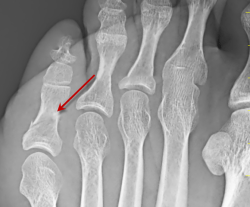
My stampcrabbiness has landed me into more trouble recently in the form of a broken toe. Before the age of modern medicine this type of injury might have proven fatal but in 21st century it just serves as a painful reminder of my oafishness with every step.

There’s nothing wrong with my hands, thankfully, so I scratched out a little verse under the influence of Percocet while icing my poor little piggy.

Penance of Stampcrab

Every footfall, an electric prod of human frailty

Each limp betrays weakness to predators

Each and every slogging step sends a contrite apology

Ahead of me, people wait impatiently

Behind me, the swift curse at my heels, exasperated

The price of a clumsy gait through life

Sheep

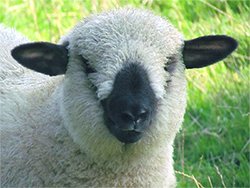
sheep-headThistle the Hampshire sheep was enjoying her ten minute break between performances of the dog show. She played sheep number 3 in the five sheep flock that was herded and separated by two champion border collies to the thrill and delight of tourists brought to the farm by the bus load.

She looked across the rolling green of the Irish countryside, past the quaintness of Glenbeigh village and out to the furious blue of the Atlantic. Her tiny sheep brain dreamed of her retirement and the sweet grass of Great Blasket Island where she would live out her final years. Little did Thistle know, after the spring shearing she would be sold for mutton chops.

Beer Gut

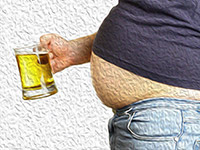
beergut-oil2Let me first apologize to anyone who was sent to this page as a result of an internet search for “losing belly fat”. Please feel free to keep reading but I feel it is fair to warn you that not one iota of scientific research went into writing this article.

The average 40-something male will probably attest to experiencing some increase in abdominal girth since their leaner 20s. This is due in large part to the sedentary lifestyle of middle age and some of the comfortable excesses it provides, we deserve you might say.

It is, however, also a natural part of the aging process caused to some degree by a decrease in testosterone production. (For the aforementioned seeking a flat stomach, perform another search for “Abs Over 40” and read, or be bombarded by, their sales pitch.)

Tragically, the natural course of things is in no way hindered by our passion and weakness for the greatest drink ever created: BEER.

The fact that BEER is loaded with calories is not news but it might be news to discover, despite what you’ve witnessed in bars during football season, that the consumption of BEER lowers testosterone levels. Worse, it stimulates estrogen production; men don’t necessarily turn into their dads.

This triumvirate of extra calories, lower testosterone and increased male estrogen creates the perfect conditions for growing a prize winning Beer Gut in your odious fat garden, proving once again that reap what we sow.

Many work very hard to counteract their love for BEER with diet and exercise. Others let nature take its visceral course. Whatever path you choose take heart in this Classic Country song Beer Gut while imbibing your favorite flavor.


http://www.johntruelove.com/music/2017/beer-gut-john_truelove.mp3

Funny Signs

harmacyThe dream faded. My eyes opened on the green, segmented digits of my alarm clock. Abraham had been correct, I was indeed the chosen one, as evidenced by the envelope beside the clock. Unfortunately, if the hour on display was correct, the chosen one had very little left of the day to deliver it.

It wasn’t easy to get up and running, sick as I was. A few days prior an annoying tickle in the back of my throat went afoul before slithering down my windpipe to make trouble in my chest. In no time my lungs were producing a thick, yellow phlegm with the fetid taste of disease.

Nurse Girlfriend ordered a long soak in a tub filled with scalding water and eucalyptus scented bath salts. Instead, I poured myself three fingers of Lansdowne Rye. Liquor soothed a prickly itch that triggered violent coughing episodes and, unlike conventional medication, this remedy took immediate effect. My head had no sooner nested in the cool dimple of my pillow than I found myself dreaming of poor Abraham Lemon falling from his ladder, paint bucket and all. I stood over his prone body on the craquelure of Hartley’s & Grill parking lot. The agony, which glazed his normally piercing turquoise eyes, caused him to whimper when he spoke, “Wake up you idiot, you are the chosen one.”

A day after Abraham Lemon’s accident a get well card was passed between the trembling hands of Hartley’s regulars. Once the card had collected the requisite amount of signatures and best wishes it was passed to me for delivery to Darden University Hospital.

Outside Abraham’s room a powerful looking custodian was swabbing the floor. He paused to plunge his mop into a bucket of steaming water that wafted disinfectant. The piercing bouquet was just the irritant needed to induce an episode disturbing enough to bring a nurse out from hiding. L.N. White insisted I wear a surgical mask and so I entered Lemon’s room looking as if I was a member of the staff.

The bed closest to the window in room 3015 cradled the long, lean frame of Lemon, A. He looked to be as peacefully sedated as I had expected, however, I didn’t fully appreciate to what degree until he started talking. Over a period of time Lemon’s drunken patois had become intelligible to my ears but this was something new.

“I thought you said we’d have not to operate, doctor,” mumbled Abraham’s strungout voice box.

The plastic tubes of his IV rattled when he lifted a weak arm either to emphasize his objection or to protect himself from the scalpel.

“Abraham, it’s me. I ain’t the doctor.” I could feel the mask scratching my lips as I spoke.

To someone imbibing top shelf pharmaceuticals my mask proved an effective disguise. His drowsy eyelids were barely ajar and he regarded me through thin slits. I made another attempt at explaining who I was and why I was there without exposing him to my germs.

“Do you remember being on the ladder at Hartley’s?”

His pallid tinge brightened a bit with recognition.

“Hartley. Yeah, I know her. Hey, you know what? I work at a place called Hartley’s Bar & Grill. I cook…sometimes.”

“Sure, Abraham, I know, man. But they don’t call it that anymore. Remember? That is what caused the accident.”

His mouth stretched into a faint smile or a perhaps a scowl of pain. It was impossible to know for sure. I continued.

“They passed that law. The one that outlawed the word BAR in the name of any business that served alcohol.

I felt that Abraham was slowly regaining the use of his memory when a nurse, different than L.N. White, appeared from nowhere on a pair of silent white sneakers to take his pulse and check the flow of whatever cocktail he was being served. She gave me a perfunctory smile and disappeared carrying with her whatever sensibilities Lemon was beginning to reclaim.

“Anyway, Abraham,” I held up the envelope, “Hartley and them got you this card. Everybody signed it.”

“Hartley. You two getting by okay. How’s the kids?”

It was unnecessary to explain to him that neither Hartley nor children were involved in my life. I didn’t even respond. Abraham was in deep hibernation.

I placed his get well card on the rolling table beside a cup with a goose-neck straw and tray of untouched food and left 3015 for home.

Lemon’s near catatonic state and one more croupy spasm before leaving Darden’s parking lot had me contemplating my own course of medication. The two options I considered were cough syrup and such, available at Lipton’s Pharmacy, or a whiskey, available at Hartley’s. Both had their arguments.

The day was nearly done and lights were sparking into action everywhere against the encroaching night: street lights, headlights, house lights, store lights. People moving in windows looked like people on a television set.

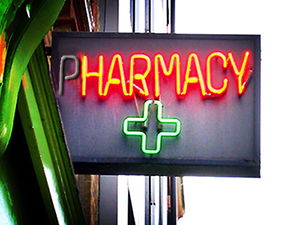
The fat, red letters on Lipton’s sign were aglow, all but the P in pharmacy. They radiated into the darkness that the family owned apothecary was still proudly serving the community after sundown.

I slowed but did not stop.

I did not stop at Hartley’s either. The bar’s placard that swung by the roadside was glowing brightly. I could almost make out the strokes that Abraham’s brush had left in the white paint he had applied over the now illegal word. At least he’d finished the job, I thought, before the ladder, unstable on the clear glaze of ice, had slid from beneath him. In Abraham’s honor, Pete, the weeknight bartender, had placed on special a shooter he called Lemon Drops until Hartley put an end to what she considered insensitive.

At home Chef Girlfriend was stirring a pot of chicken soup she had promised her ailing honey.

“Where have you been, hon?” Chef Girlfriend left the bubbling cauldron and began chopping herbs.

“Hospital,” I wheezed, “had to deliver that card to Lemon.”

“You’ve got to be kidding. Why didn’t you just give it to me. I work there, remember.”

I hadn’t thought of that until that exact moment and said as much.

“You’re going to catch pneumonia if you’re not careful. Speaking of which,” she pointed with the tip of the knife to a bag on the table,  “I stopped at Lipton’s and picked you up some goodies.”

I was glad I did not make the stop and asked if she had noticed the sign with the missing P.

“Lipton’s Harmacy? Yea, there’s some irony for you. “I almost didn’t want to go in.” She gave me a big smile, “Funny, right?”

“It’s funny alright. There are a lot of funny signs out there now.”

She tilted her head and raised an eyebrow.  “What do you mean?”

That a law intended to defend the public, or at least the public’s perpetually vulnerable morality, had sent a man to a hospital bed was not the type of cosmic paradox I felt worthy of acknowledging.

“Oh, nothing. What time’s dinner, babe?”

Mission Failure

Man Overlooking Mars A while back I started working freelance so that I might untangle myself from the corporate day-to-day. It wasn’t the life I expected. In fact, not much changed except that I lost my insurance and other benefits associated with full-timers.

I wrote this story during my last gig.

It takes place in the distant future but, as you well read, nothing much has changed.

Mission Failure

Manhattan was beset by a cold and gray afternoon. Clouds drifted by the streaked windows of the 45th floor like lost spirits. Weighted down with despair, they slowly fell to earth where they mingled with the fog that haunted the wet sidewalks. Red brake lights retreating north, amber headlamps advancing south reflected their colors off the slick and glistening pavement. The Hudson was a lifeless slab, a vanity mirror for the leaden sky to gaze at its somber face. On the other side New Jersey was all but forgotten behind a drab stage curtain lifted just enough to view a sliver of the complex urban set constructed behind.

In the corner of my eye Lawson grew larger, his hazy shape forming into solid contours as he scurried to my desk. Harried as usual, be shook a piece of paper like Chamberlain just off the plane from Munich. Lawson was beleaguered and gaunt and I wondered if the same cancer that ate Neville’s bowels bad begun feasting on Lawson’s. The paper was not for me, thankfully, but he held it within close range of my ear so that I might experience its abrasive noise as it crinkled in his nervous clutch.

I had grown accustomed to Lawson’s blustery ovations to otherwise trivial matters. Had anyone else approached my desk in such a wide-eyed state I would have been dreading a pronouncement of consequence, knowing what pronouncements of consequence usually held.

“God awful weather, eh?”

I nodded, “Terrible.”

“It’s a beautiful day at my desk. Let me see.” He dragged a rake of five boney fingers through a head of ashen hair, an action that produced a squall of dandruff that dusted the top of my desk. “My Eco is set on A, no C19: San Francisco harbor, sunny, no fog.”

“Mine was the dreary East when I came in this morning. I can’t change it.” I feigned a long sigh in order to blow away the debris from Lawson’s scalp.

“Call our systems support outlet.”

The scene outside was the perfect pairing for my mood, or maybe it had created my mood. At any rate, there was no strong urge to make adjustments. I yawned, deeply.

Lawson hushed the agitated paper by laying it out before me. What was once a crisp, white sheet was now a corrugated mess. He attempted to smooth out some of the wrinkles that his worry had rendered. His crooked index extended, he delivered a quick succession of taps to the bold print that read: Notice of Compliance Failure. It was a pronouncement of consequence after all but one that concerned Lawson and Lawson alone.

His face was a mask of dire predicament. “Apparently I have scored too low on my last CSE. Do you know what that means?”

“You didn’t study.”

A flash of consternation crumbled into the exasperated look of an earnest man suffering the fool. “You know you can’t study.”

“So, you’ll take it again.”

“Three chances then you’re out. Gone. Transfer or contingent leave. I have two left.” Staring blankly across the expanse of office floor 45, “I don’t even know where I would go.”

And with that he was gone, stumbling absently back to his view of San Francisco to fret over the soiled notice he had left behind.

A helicopter buzzed through the gloom, northbound, following the tail lights on the north side highway, over the toy boat ferries, to destinations unknown even to the coded functions in the Eco’s elaborate guts. I chose C19 on the keypad: stormy New York persisted.

I had been determined to allow myself the luxury of wallowing in self-pity all morning but my own glum mood had been spoiled by its confederation with Lawson’s residue of disconsolation. My suffering had become a crashing bore. I was eager for brighter surroundings. In seconds I was speaking to someone who introduced himself as Kelvin, J.

“Thank you for contacting your systems support outlet. May I have your user ID and security code, please?”

Credentials provided and problem described, Kelvin began his diagnosis.

“Okay. Looks like I see you in New York, stormy. And you’ve tried steps 2 through 7 in your Eco’s operation manual?”

Confessing I had not, I was led through a series of procedures designed to eliminate the probable cause of malfunction. He typed as he spoke and the plastic clatter of keystrokes punctuated his instructions. Click, clack, click, clack. A sudden flash of white was promising but otherwise, no improvement.

“Well, I can go ahead and change your Eco from here but I will have to dispatch a member of the ground unit to switch out your hardware. It might take a day or two; we are kind of backed up. What would you like on your Eco? Something nicer, I’m guessing. How about tropical?”

As pleasant sounding as it was, Kelvin’s suggestion seemed far too wet at this point. The desert I thought and requested.

“Uh…okay.” There was an extensive list from which to choose and each included such parameters as, season, time of day or evening. “Mojave, Gobi, Painted, Sahara?”

I requested Death Valley, my saturnine disposition not fully lifted. My choice included several specific points within its enormity. Having never been, I picked the alluringly named Artist’s Palette. My first glimpse of the desert’s majesty lasted only seconds. The tender petals of an indigo bush trembled in the breeze and vanished into crackling static. Then there was nothing but space: empty, void, nada, zilch – zero.

Kelvin J. was silent. Had it not been for the moist ebb and flow of his breathing I would have thought he’d joined New York and the desert in oblivion.

“Nothing, huh? That’s weird. Well, a functioning Eco is important so I will escalate this issue to, Tier 2. Meanwhile, I’ll go ahead and expedite your hardware exchange.”

Tier 2: I imagined the system support team arranged on a ridiculous étagère. A ticket was issued, a random alphanumeric sequence that signified nothing to anything but the matrices of system support where endless troubles and resolutions were chronicled – short tales of woe and happily­ ever-afters. Call completed.

With no Eco I had the unique opportunity to use the gigantic window for its original purpose. I stood looking out our vast universe. Overhead, Earth was a point of light in the endless black. Below, Mars, a pocked bloodstone marbled with veins of rich crimson and pale yellow wrapped in a lambent, copper haze.

A full year, Earth not Martian, had elapsed since I began my contract with the interplanetary corporation Galaxy Sunn. This period of time was nine months longer than the agreement stated when it was signed – by me, one year ago. A series of work extensions and certain difficulties posed by a distance of 43 million miles had kept me long past my release date. And, while my compensation had accumulated nicely, further interest in the position had not; I was more than ready to sever the relationship.

However, a voluntary resignation would place the burden of paying for my own accommodations while waiting on the next available transport, also out-of­ pocket, back to big, blue Mother. ”Next available” could mean days, weeks or months while my debt to G.S. Inc. for room and board accrued. A normal contract termination was more agreeable since the corporation picked up the tab but this formal release had not been issued and, as the extensions piled up, I feared it never would. Certain parallels could be drawn between my situation and those of the penal colony occupants digging in the rusty Martian soil.

I carved a question mark in the rime of frost my weary sigh – not feigned – left on the glass. Had there been some guidance for resolving my dilemma, it was not in the heavens. Nor were the familiar vistas and skylines of earth available for contemplation with Eco defunct. Instead, inspiration came from the crumpled receipt of Lawson’s failure.

The Core Stress Evaluation was one of many periodic tests The Inc. maintained as a bulwark against liability. Low scores were an early indicator of a decline in skill sets that could potentially place revenue, property and lives in jeopardy. Whatever threat Lawson posed to any of this capital was ponderous. He was, nonetheless, now referred to in certain database circles as Lawson, the risk. My colleague was determined to improve his standings in this clique; I was determined to do irreparable damage.

Unfortunately, my contractor status made me exempt from such things as the CSE. And so, compiling a list of alternative methods that could achieve a blemish substantial enough to warrant a discharge without ruining future prospects elsewhere or becoming entangled in legal troubles consumed my free time. Blank was how my list remained over the next few days. Lawson, in contrast, had achieved strike 2. Effortless.

Set against the colossal blackness of space his lanky frame seemed to deteriorate before my eyes as he stood in front of my Eco-less window. Gustav Holst: his Planets, Neptune the Mystic, the final movement and its choir dissolving into the realm of the inaudible, this was Lawson’s own voice – fading into nothing.

Wringing hands: “I don’t understand. I’ve never had problems with CSE. I can’t go back to blue Mother. What would I do?” He paced.” How do you stand it without an Eco? Without day and night I wouldn’t ever stop working. It would drive me insane.”

“I opened a ticket.”

“Ticket, ha! Tier 1 or Tier 2? Oh, it makes no difference. Those guys are kids, I have shoes older than most of them. They don’t know how to do anything. I’d go down to support in person and ask for a Team Lead.”

There were no Team Leads on duty when I arrived at my support system outlet on level 22-F. Kelvin J. was not there either. Lawson had been accurate about this department’s youthful composition; the support representative who assisted me could have easily been younger than Lawson’s footwear antiquities. She introduced herself as Hope, no last initial.

Click, clack, click, clack.

She entered the ticket number I’d produced into her computer console. Blank. “That’s weird.” Head scratched, she retyped the entry, this time slower, careful, deliberate. Blank, still. A third try returned the same.

Eupeptic and eager, “Well, I’ll just enter a new ticket and expedite it for you.” Personal details taken, she asked me to describe my technical issue.

I felt the words Eco and Broken and Hardware taking shape behind my teeth as Hope’s fingers drummed lightly on the keys waiting for instructions.

“CSE. I haven’t received my notice for the CSE. I think I might be past due.”

Her petite nose almost touched the display and its glow highlighted her features with a bluish tint as she scrolled through the list repeating the letters CSE aloud as if to conjure it up.

Cheerfully, “Here it is: Core Stress Evaluation.” She sounded out the syllables in a measured tone so there’d be no confusion.

She leaned back in her chair out of the monitor’s corona. Her expression had changed from winsome to worry. The timbre of her voice darkened, “But this says you’re exempt.”

I mirrored her concern and added disbelief. Barefaced, “But I took it six months ago, as instructed.” I conflated my lie with a poignant recollection of how the same thing had happened before and what a time I’d endured.

Reassured and generously pitiable she began typing. It was good to see her chipper nature return.

”Well, there were some updates to certain divisions recently. That could have affected your account. I’ll just change your status then and add your CSE.”

In moments I was the recipient of a new alphanumeric code and Hope’s promise that I would see a notice from Galaxy Sunn compliance to complete my CSE within two business days.

The gravity generators could have crashed for all I knew as I practically floated back to my desk to wait like a school boy on Christmas Eve. Soon I could begin failing three times, all the way back to blue Mother.

What came in two business days was indeed a notice from the compliance office of Galaxy Sunn Inc. I was congratulated and thanked, personally and profusely, by my Team Lead and his Team Lead on behalf of the Interplanet Security and Intelligence Division. Through my efforts, a gaping hole, in an ominous sounding bit of gadgetry that I never knew existed, had been discovered and patched against possible catastrophic breach. My contributions and value to The Inc. were such that my contract was extended for six months, Martian not Earth.

My Eco was restored shortly after my pronouncement of consequence and upgraded to boot. Poor Lawson, strike 3 and his desk was clean before the sun set on the San Francisco harbor. We shook hands for the last time at my desk that overlooked the Hudson and New Jersey. Manhattan was beset by a cold and gray afternoon.

Winter

A clock trapped under ice Winter, the dead of…

Dear Glen

Sorry this card is late. It has been so cold here that on Friday afternoon Time itself froze, solid. When we finally got the old girl defrosted it was already Tuesday, you’re birthday, and this card was still not posted.

The circumstance was as surreal as the times that winter forced us on our backs to worm beneath the old house where copper pipes ran like bluish patina blood vessels in the frigid narrows of the crawl space.

A ceiling of raw oak floorboards
A floor of bare earth
Stalagmites of rat dung rising
Rusted nail stalactites looming

We pushed our bodies through the depths like some yet undiscovered subterranean species, vulnerable at all times to attack by wild creatures nesting in dark recesses.

With the warm air from the lungs of hair dryers connected to long umbilical cords of electricity we thawed the crystals of ice that clogged the water lines and emerged stiff and cold from the underworld with just enough time to eat breakfast before the school bus arrived.

Many happy returns

Autumn

maple-leaf

My touch brings a chill

A golden leaf, she trembles

Our summer is gone

A Pier at the End of Summer


pier-painting

As it is now officially sum-sum-summertime I offer a bit of light prose for a lazy afternoon in the hammock or on the beach.

It includes infidelity, descent into madness, heroism, crime and a trip to the seashore to boot.

You can read it all right here or you can download the PDF and print it out for reading offline just in case that summer thunderstorm knocks the power out in your neck of the woods.

Click the link for the file: A-Pier-at-the-End-of-Summer-JohnTruelove

A Pier at the End of Summer

Drake Mathews opened the door to a balcony overlooking mountainous dunes, covered in thick blades of grass and golden sea oats. Beyond the dunes, the beach stretched into the endless waves of the Atlantic. On the horizon, green clouds had massed and the strong breeze that blew through his hair and into his stuffy hotel room smelled of salt and the approaching storm. Drake had not bothered to close the front door when he’d carried in his bags and the squall he created blew it shut with a violent bang. The sudden noise startled him and he jerked around, expecting to find something worse than a darkened foyer. He parted the dense curtains that covered the large picture window and the afternoon sun spilled over the room’s modest furnishings. He had rented an efficiency apartment that came equipped with a refrigerator, sink, stove and a small bar with two stools that served as the kitchenette’s dining table. There was a full-size bed, a heavy looking love seat, and a wobbly coffee table of artificial wood, all facing a television. Below the window, an air conditioner was fitted neatly into the wall, but he preferred the natural air and the ocean noises so he left the unit off.

From the suitcase he’d thrown on the bed, Drake removed a short stack of shirts he planned on hanging up, a toiletry kit, and a Colt .45 handgun, placing the items side by side on the stiff mattress. The duvet and pillow shams were dark blue with a seaside print of white shells, fish, sea horses, star fish, and life preserver rings. He laughed to himself when he realized that he had laid the pistol directly on top of a life preserver and he returned it to the suitcase beneath his boxer shorts.

He slid a bottle of bourbon from brown a paper bag and absently tossed the empty, wrinkled sack on the floor. Leaving the bottle on the bar, Drake took what he figured served as the room’s ice bucket and went to find the hotel’s ice machine.

Drake Mathews made the trip from New York to the coast of North Carolina in a little less than ten hours, stopping at intervals only long enough to refuel, buy coffee, and use the bathroom.  Ultimately, he was more interested in leaving the city in the shortest time possible than he was in reaching his destination. He had called the borough of Queens home for over twenty years – until a series of events sent him spiraling into a crisis that caused him to make less-than-pragmatic decisions.

He found the ice maker humming alongside a Pepsi vending machine tucked away in a stifling little room under a stairway. It was a hot, late-summer day and on the west side of the hotel, without the immediate benefit of the coastal breezes, the heat rising form the black asphalt of the parking lot was suffocating. By the time he got back to his room, both he and his ice were sweating profusely. He found a glass in a cabinet above the kitchen sink, filled the bottom with a handful of watery ice, and put the rest in the freezer. He gave himself a good sized pour from the new bottle and took a seat on the balcony, watching tendrils of lightning sizzle in the approaching clouds.

The beach was deserted by the time the first big drops of rain began spotting the sun-baked crust on the top of the sand. Drake went inside and made another drink. The film of water on the ice had refrozen quickly and the cubes were now fused into a solid brick, which Drake chipped at with a fork. A resounding explosion of thunder ripped the air like cannon fire through the walls of a paper castle, and the sheets of rain that followed were so dense they obstructed any view past the first foothills of dunes. Tiny pebbles of hail ricocheted off the window and Drake propped himself up on the bed to watch the storm through the rain-streaked glass before falling asleep.

***

When the divorce papers sent by the firm representing Mrs. Drake Mathews arrived at his office, he was expecting them. Their previous marriage-counseling sessions revealed in minute detail her festering dissatisfaction with him. The therapy was refereed by a female psychologist in her late fifties who sat comfortably in an oversized armchair with her legs tucked beneath her as if she were watching television. She listened intently as each partner spoke, hoping to hear among the accusations and criticisms anything that could be salvaged and used to repair the couple’s union. Drake’s wife did most of the talking, though, and she was so forthcoming about their private matters that he felt very little inclination to speak himself. During the time his wife had the floor, the doctor’s impartial gaze would often shift its focus to him. She studied his facial expressions and body language for anything that might have betrayed what he was thinking. One particularly heated diatribe culminated with his wife admitting to having had an extended affair. When this admission came to light, there was no need for the therapist to interpret Drake’s feelings; without a word he had stood and left the room.

What Drake did not expect was to be told that the position he’d held for fifteen years had been eliminated as part of a corporate downsizing initiative. Even more unexpected was having the news delivered by his regional manager, the same man who had been sleeping with his wife. The lawsuit he filed against his company was settled out of court and in his favor, but the proceedings had been humiliating and rumors circulated through his industry. And as he began his search for new opportunities, he discovered that the stigma attached to his name left a cautionary flag on his resume and always preceded him to interviews.

During the tumultuous legal proceedings, Drake began to notice a hollow feeling above his stomach. He assumed he’d developed an ulcer and joked with his regular physician that part of his soul had been sucked out; a battery of tests was conducted. His doctor had offered up Brazil as a fine destination when Drake mentioned he might take a long vacation. He was actually reading a copy of Frommer’s guide to South America when the doctor called to tell him he did not have an ulcer and suggested a specialist.

When Drake woke, it was still light outside, but the brunt of the storm had passed, leaving in its wake a fine drizzle that misted out of a gray sky. The temperature had fallen considerably and the hairs on his arms rose as he shivered against the chill drifting in from the balcony. He got up to close the door and felt the spongy carpet beneath his bare feet. Some of the storm had found its way inside and soaked a large area of the floor. He noticed the empty glass on the bed and hoped that the damp spot on the crotch of his trousers was only spilled whisky and melted ice. He shut the door and went to the bathroom to take a shower.

***

The next morning was cool and breezy, with billowy clouds floating in a peaceful sky. Drake walked down a path cut into the dunes that led to the beach. At the entrance, the local police department had posted a sign that warned of strong rip currents. He was headed toward a fishing pier that he could see from his room.  When he had checked in to the hotel, the desk clerk had given him a brief overview of the nearby businesses and attractions. The pier was open to the public and was attached to a shop that sold fishing supplies and groceries. The shop also ran a short-order grill and Drake was able to purchase a Styrofoam cup of coffee and a pair of glazed donuts wrapped in a thin membrane of clear plastic. The massive wooden pilings held the pier’s wide deck high above the crashing breakers and the gentle, green undulations above the deep. The worn older planks, cracked and warped by the costal elements, were interspersed with newer replacements but all bore some scar or stain left by fishermen and the life they wrestled from the ocean below.

At the end, where the pier widened into a rectangle, a colony of sportsmen tended several lines. Some leaned on the railing and others sat on the tops of large red and blue Igloo coolers. By the look of the group, Drake reasoned they had been fishing all night.

Drake also noticed a fierce looking gull busy trying to make a meal out of what might have been the dried viscera of a fish. The bird pecked at the spot, circling around it on rubbery feet. It paid no mind to him as he took a seat on a tall bench nearby and propped his feet up on the railing. He set down his cup and fumbled in the pocket of his shorts for a pack of cigarettes. Drake had given up smoking years ago but had picked up a carton at a gas station in Virginia along with a disposable lighter that he held in the shelter of his cupped hand as he lit the tip of the cigarette and inhaled deeply. He had already smoked half of the pack – they were incredibly fresh and delicious – and a bargain by New York City standards.

***

At forty-seven, Drake found himself without a relationship or a career. The hollow space inside him remained, promising a dismal outlook on his future health; he had neglected to contact the recommended specialist. The studio apartment he had moved into after the separation from his wife seemed to decrease daily in size as though it were shrinking while Drake slept. There were days when he would not leave his room at all. Instead, he tried watching the walls for any movement, but reasoned they might have been moving too slowly to be perceived by the naked eye.  He remembered as a teenager watching his stepfather mark the level of booze in his liquor bottles to deter uninvited potation. And so, with a ruler and heavy pencil, he employed a similar method of surveillance by drawing firm ticks on the hardwood floor an inch from the baseboard. He would check the marks mornings and evenings with the ruler to record any activity. It was hard to be certain, but there was either no change or the gradation of his ruler was not precise enough to measure distance on such a small scale.

He had inherited his .45 pistol from an uncle and had lived with it in violation of New York City handgun laws for many years. He enjoyed shooting as a youth and considered himself a good shot, although this particular weapon had remained locked in its case and hidden away since the first day it came into his possession. Once he was again living alone, Drake took time to clean and oil it properly as he became reacquainted with its solid weight, the diamond-patterned grip, and the tension of the trigger by firing imaginary rounds into the plaster of the encroaching walls. When the muscle in his forearm grew too tired to continue he would lift the barrel to his temple and give the trigger a final pull.

He was thinning out years of financial records from a file storage box when he came across a postcard sent to him years ago by someone with whom he’d since fallen out of touch. “Greetings from Poseidon’s Oceanfront Hotel – Cypress Island, NC” was printed on the front above a cartoon sea god wearing a pair of sunglasses. On the back was a blurb about the hotel and the island community. He researched both in greater detail the following day.

Anything that did not fit into the trunk of his Toyota four-door was carried to the curb on trash collection day. He left the same night feeling better than he had in months.

***

Drake finished his breakfast and carried the litter to a garbage can chained to a light post. He lit another cigarette and was about to make the trip back to his hotel room when he heard a commotion at the end of the pier. The group of night fishers had congregated on one side and were looking down at the water as one pointed to a piling where an inflatable raft with the print of the North Carolina state flag was snagged by its tow rope. A few yards away, directly below where Drake was standing, a woman clung desperately to a piling as white-capped swells washed over her. A crowd had gathered on the beach and an old man in bib overalls and a John Deere cap joined him at the railing, mumbling something about rip tides and drowning.

Drake handed his wallet, room key, cigarettes, and lighter to the man. Stepping out of his flip-flops and removing his shirt, he climbed over the side and jumped in feet first. The ocean swallowed him whole and its waters closed off the world above him, shutting out all light and sound as his plunge took him well below the layer holding the sun’s warmth and into a black, cold vacuum. For the instant his body remained in place, neither sinking further nor rising, he wondered if it felt something like this in the end.

When his head broke the surface he was facing away from the pier and it took a moment to establish his bearings. The ocean was calm but the sea was lapping at his face as he treaded water to keep afloat. It was difficult to see. The tiny droplets clinging to his eye lashes distorted his view – tiny, inaccurate lenses that refracted the light bouncing off the surface. He looked up and saw the old man on the pier and traced his position to where the woman hugged the piling. When he swam close enough he could hear her whimpering in panic. He coaxed her into taking his outstretched hand and when she had released her hold on the pier, Drake dove and swam underneath her. He surfaced again behind her and quickly wrapped his left arm around her neck and began towing her to shore. The barnacles encrusting the piling had lacerated the woman’s arms and legs badly and, as Drake swam, she left a trail of blood drifting behind the two of them like scarlet ribbons fluttering in the breeze.

The crowd awaiting them on the beach included two paramedics and a police officer. Three men had waded into the surf and they helped Drake and the woman out of the water. Exhausted, he found a spot just beyond reach of the incoming tide and sat down in the dry sand. One of the rescue workers began treating the woman’s cuts while the other examined Drake and asked if he needed further assistance. Drake waved him away and the medic returned to assist his partner. Among the gathering was the fisherman from the pier, who had brought Drake’s things down to him in a grocery bag. He also carried a roll of paper towels and pulled off several sheets for the dripping hero.

While Drake wiped his face, he noticed that a pair of brightly polished black shoes had appeared beside him. Looking up he could see his soggy reflection in the dark sun glasses of the police officer.  It was peculiar to see someone on the beach so formally dressed. Drake knew that he must have found the full uniform uncomfortable, judging from the beads of sweat that dotted his pink brow and the oily rivulet that trickled from the thick stubble of his crew cut.

When the officer asked for identification, Drake retrieved his wallet from the shopping bag and extracted his New York driver’s license. The officer read Drake’s information into a walkie-talkie and in a few moments a hollow, disembodied voice spoke back in police code that Drake couldn’t understand. From the rear pocket of his blue trousers, the officer produced a thick tablet and took down some details on Drake’s license before handing it back, along with the pink copy of a summons.

As it was explained to him, jumping or diving from a fishing pier was in violation of town ordinance and was clearly posted on all such structures. Drake could pay the $150 fine in person or by mail, and if he wanted to challenge the citation, he could appear in court at the time and location printed on the ticket. Drake was too tired and dumbfounded to protest. He was parched and a sudden wave of nausea only added to his weakened condition. He was worried that he wouldn’t be able to stand, much less stumble back to his hotel room. The fisherman, whose principles of justice and civic duty had been challenged, came to Drake’s defense. But his initial appeal was ignored and further, more pointed indignation only bounced off the back of the retreating officer and was silenced by the sand where it fell.  Drake, now fully prostrate, could see the old man scratching at the shaking head beneath his John Deere cap and heard him muttering colorful phrases about local law enforcement.

***

After a few days of debating how to handle the situation, Drake finally decided it would be best to settle the matter in person. He had done his best to try and forget about the whole incident and enjoy himself. With complete abandon he indulged in activities and substances a man his age would have normally avoided or at least taken in moderation. He partook of the culinary offerings around the hotel with ravenous gluttony, surviving on a diet of cheeseburgers, fried food, and doughnuts, finishing each meal with a delicious cigarette. He swam at his own risk, walked for miles on the beach without the aegis of sunscreen, and drank heavily from the whiskey bottle that was soon replaced with another. However, his recent misdemeanor remained an irritant and the pink ticket served as a constant reminder. He had fastened the summons to the refrigerator by a flexible magnet advertising a local restaurant, presumably left behind by a former tenant. The slip had an unpleasant chemical odor that Drake inhaled every time he needed a cold beer.

He appointed a date for himself and on that morning he made himself presentable by showering, shaving, and dressing in clean, pressed clothes. He chose a short-sleeved shirt with a square hem that hung a few inches over his belt, allowing the generous yellow linen to move freely. He left the top two buttons undone to further accentuate what he hoped was a casual demeanor.

Police headquarters was a short drive from the hotel and was set up in a squat cinderblock building that also housed the island’s volunteer fire and rescue. The only person in the building was a chipper civilian office clerk who greeted Drake with a big smile and offered to help in any way she could. He asked to speak with the officer whose name he remembered stamped on the gold plate above his badge and whose signature, written neatly on the ticket, greeted his trips to the refrigerator with a cruel smirk. The clerk said she was waiting for his return from a local eatery where he’d gone to pick up coffee and a ham biscuit for himself and an egg sandwich with ketchup for her. Drake was more than welcome to wait, which he did, passing the time by reading the notices pinned to an enormous bulletin board.

There was an electric eye at the front door which triggered a mild, little beep that announced the station’s comings and goings. When Drake heard the alarm, he turned to see the policeman carrying his takeout order in a small cardboard box printed with the name of a snack cake. His eyes were not hidden behind the dark frames of his glasses and grew wide when they saw Drake approach him from the bulletin board. The officer dropped the box but before he could bring his free hand to the gun in his holster, Drake was already aiming the .45 he’d kept concealed beneath his shirt. He fired two shots directly into the officer’s chest and the force of the pistol’s caliber sent the policeman’s limp body crashing into the wide blood pattern that splattered the wall behind him. The clerk sat frozen behind her desk as the report reverberated around the room. She had turned white and seemed to be choking on a scream stuck in the back of her mouth, hanging open on the hinges of her slackened jaws. He delivered two more slugs into her soft abdomen, knocking her out of the chair.

Drake looked down at where the box of food had hit the floor. The lid of one cup had come off on impact and coffee – with cream – had spilled into a light tan puddle on the linoleum. He tucked his .45 back into his belt and picked up the other cup. He removed the lid and blew lightly on the black coffee before taking a sip. He peeled the foil wrapping from the sandwiches, smelled both and selected the ham biscuit. When he stepped outside, the only thing that noticed him was the electric eye as its high-pitched tone bid Drake farewell.

***

The ham biscuit had given him a bad case of heartburn and he crunched on a chalky antacid tablet as he walked out to the end of the pier. Drake deftly folded the pink ticket into a paper airplane and launched it out across the ocean. The weightless jet teetered on its makeshift wings until it was caught and blown backwards by a strong draft, forcing it to make a crash landing in a bait tank. A cluster of silver fish pecked at the fuselage as if the wreckage were a morsel of food. Drake plucked the dripping paper from the tank and deposited it into a trash can.

The television brought the evening news and the day’s gruesome headline into his room with all the sensationalism the networks reserve for unthinkable crimes committed in small towns where nothing much ever happens.

Drake thought it was all very entertaining as he alternated between the whiskey bottle and a can of beer. The only progress in the investigation was a series of still images taken by a security camera. The grainy black and white photos captured the lone gunman committing his crime as it progressed in ten-second intervals. Drake wanted to take all of the photos and bind them into a flip book so he could watch the murders like a silent movie, as his thumb releasing frame after frame after frame.

It was hard to see his own likeness in the photos, but he wondered if the hotel manager had recognized him as the tenant in room 222, and was, at that very moment, calling the hotline number listed on the bottom of the screen. He picked up the unloaded .45 and squeezed a few empty rounds towards the imaginary strike force kicking down the door. Then he aimed and fired at the blonde anchorwoman whose beauty was spoiled by her solemn recitation of the grisly details.  He continued firing phantom bullets randomly throughout the room, piercing the metal skins of the stove and refrigerator, exploding the lamp’s earthenware base into jagged shards, and leaving the walls riddled with charred, smoking holes.

A chimerical blast chased after each make-believe slug like a harried messenger too late with the news of its deadly arrival.  The concussions echoed off the walls and gradually dissipated into the soft thud of ocean waves striking the shore. Soon, the voice of the Atlantic was the only sound to be heard in the apartment, and into the ringing ear of Drake Mathews it whispered, “The end, the end.”


The Sock Puppet

The Sock Puppet MasterSocks are important. Be they the thick workaholics inside the boots of a day laborer or the stylish yet humble argyle on the feet of a day trader, our socks are a layer of armor against a chafing world. Sadly, a sock’s lifespan can be short and it is sad when a hole is discovered in the toe or heel of a favorite pair. Even worse is the abrupt loss of a good sock in its prime. In either case, without its twin the surviving stocking is condemned to live out the remainder of its days in a pile of dust rags, in a shine box, or maybe in the drawer of crazy aunt who doesn’t care what she wears.

I was discussing the plight of such raiment orphans with Dan Kilian who admitted having an emotional moment at the pathetic sight of one of his own that had lost its mate.

The following scenario tells one possible alternative for a sock that endures without its better half.

The Sock Puppet

The sock puppet wasn’t much of a puppet. There was no mouth stitched into the toe or button eyes sewn on. Really, there were no anthropomorphic features of any kind. He simply pulled an athletic sock over his fist and stretched it up his bare forearm so that the cuff with the three red stripes was just below his elbow.

His light colored garments did not enjoy the benefits of being separated from the dark fabrics on laundry day and as a consequence, regular washing in these unsegregated loads had tinged the original crisp white the color of a rainy day. Normal wear had painted a dark footprint on the sole and and had strained the elasticity so that the sock resembled loose skin.

He moved his wrist up and down bringing the puppet to life. His extended fingers gave what was roughly the head section a pronounced beak. With nothing to serve as eyes or mouth the creature took on the macabre appearance of a condemned man on the hangman’s scaffold, bobbing his hooded head in anticipation of the end.

The puppeteer’s attempt at ventriloquism was no better. He made no effort to obfuscate the movement of his own lips while the sock performed its routine in high pitched voice.

“Hi, everybody. I’m…” It paused and the head looked upward searching the heavens for a nifty stage name. It found no inspiration there and the puppet master demonstrated his mediocrity further, continuing: “…I’m Socks.”

The introduction was met with groans and rolling eyes from the audience who’d gathered.

“Oh, now wait one darn minute,” scolded Socks. “You know what you people need? I’ll tell you what. Imagination, that’s what.”

Mouths curled into unimpressed smirks at the pot regarding the kettle.

“You think it’s easy being a sock puppet? You think it’s all fun and games?”

“It hasn’t been fun so far,” someone shouted.

“Oh, a heckler, eh. Stuff a sock in it buddy!” Socks giggled at his own joke as the crowd grew restless and impatient grumbles began.

“I wasn’t always a puppet you know. But I lost my mate in a tragic laundry accident and I was forced to look for other work.”

“Was he your right hand man,” the heckler gibed on.

Ignoring: “Who’s going to hire a single sock? You might be surprised to learn there aren’t that many amputees out there. So I used my imagination and went into show business.”

“You stink!”

“Well, as a sock that’s part of the act, wiseguy.”